Recently, I had a meeting with a friend who consulted me regarding his office computer network. There I was able to meet a young and affable businessman who has a heart for the poor youth. His business is into web development specializing in graphics. As we were discussing some business ideas, he raised his desire to put up a program to help the underprivileged youth and train them in graphic design. I let him explain, but the idea he presented was for me, still very vague. It is a noble intention worthy to be pursued. With careful planning it can be a very fulfilling project. For him and for any project manager.
Since, I was once involved in a program who ministered to youth development and poverty alleviation, as a project manager I offered him some concrete ideas on how to make his noble desire a reality and most importantly, viable and sustainable.
I presented to him three deliverables: Education, Employability or Entrepreneurship, Excellence and Ethics. These three, I believe are the most important aspects in developing the youth to help them gain talents which they can use to alleviate their economic condition and to become responsible citizens of this country.
Education
In my experience with the out of school youth, their academic life starts to wane when they reach an age where they are able to find menial jobs, or worse, a gang where they feel they can belong to. Most are males. Statistics show that males are the most susceptible to drop out of school not only because of poverty but mainly for lack of proper guidance from parents or guardians. When they turn to neighborhood gangs, their lives turn to hooliganism. Sad, but it is very true and this is the reality. Thereafter they are stuck to doing menial jobs most of their lives because they lack the necessary skills or training.
The first process then is to enhance their basic literacy in the three R's - reading, writing and arithmetic. My experience shows that these youth may be able to read, but can only comprehend a little of what they have read. It is understandable since most of them might only have three or four years of schooling.
Fortunately, the education department has a program for these out of school youth. It is called the Non-Formal Education Program or NFE. The youth does not have to be enrolled in a formal school setting but will be taught lessons that can enhance their comprehension guided by an DepEd accredited NFE teacher. After completing the required lessons, a certification shall be awarded to the youth depending on the level of the NFE training - elementary or high school - they received. But this program is not a substitute for the formal education, it is only a stop gap remedy for the youth to catch up on the lost years he should have been in school. Enhancing their capacity to comprehend is the objective of the first deliverable.
Employability or Entrepreneurship
After their comprehension and literacy is satisfied, then it becomes viable to give them skill training to make them employable or better to enhance their entrepreneurial spirit.
Let's get back to what was discussed - graphic design. Teaching them just the basics of graphic designing won't be enough. We have to take into consideration the environment they lived and grew up in. What influenced them. In my experience, I found that their paradigms and creativity, though they may have the talent, are limited. Mainly due to lack of self-confidence or knowledge.
Therefor in designing a curriculum for their graphic design training, how to appreciate art - classical, abstract, contemporary - has to be included. This would then be the foundation of their graphic and artistic talent,confidence and paradigm building.
Excellence and Ethics
Lastly, but importantly, they have to be taught how to love their work or trade and how to be competitive in the real world. Remember they may have come from a home or community environment that is less than desirable. They may have been gang members living on the edge or in conflict with the law. Thus, it is also important that they have to undergo moral and personality development.
Business is governed by ethical standards. There are written or unwritten rules that must be respected. In other words, to succeed, one has to have integrity. He has to earn respectability by being trustworthy not only in his work or trade but in life, whether he is employed or a businessman or tradesman.
Fulfillment of a Project Manager
As in any project or program, it has to be viable and sustainable. There will always be a lot of processes involved. Helping and training the poor to alleviate his economic condition is not an exemption. If is to be done, it has to be done in an exemplary way. The project presented here may be taken as one holistic approach if budget and resources will permit or may be broken down into smaller and more manageable endeavor.
People development are more complex but has a far reaching effect on one's inner being than developing any product or services. But if done with love and inspiration, it will be the most fulfilling opportunity for any project manager. Nothing beats achieving an objective that benefits people in need. Take my word for it.
Showing posts with label poverty. Show all posts
Showing posts with label poverty. Show all posts
17 October 2011


11 April 2011
Helping The Poor Goes Beyond Rhetorics
Dole outs have been proven by time not to be the solution to help the poor. It comes in many forms accomplishing nothing but the satisfaction of the ego. Used and abused by those who professed to be benevolent benefactors. Rhetorics will not alleviate their poor condition, instead they will only remain in the mire they are trapped in. The cycle of poverty will just continue dragging with them their hopes and dreams.
Empathizing with the poor will help you to understand that what they want most of all is to keep their dignity. That they receive dole outs does not mean they would like to rely on it but are merely forced by circumstances to satisfy their immediate and pressing needs for the moment. If you sit with them and try to listen, what you will hear is their yearning to be given the opportunity to labor or to have stable jobs to sustain themselves and their family's basic needs - food, clothing, education. They are human after all.
Helping the poor has evolved into a social science. It is an effort that is not done haphazardly with mitigating motives. It is done with a heartfelt undertaking. Carefully planned and implemented.
A sustainable project that can be nourished progressively is the key to alleviate their condition. A program that will ensure that their long term need shall be met. Providing them with opportunities to become productive members of society. One step at a time.
No one man or organization nor the government itself can alleviate their condition doing it alone. It must be a communal endeavor where every member has a role even the beneficiary himself, for it is his future that is at stake.
A development partnership or coordination among major players such as government, development organizations and corporations is the other key to poverty alleviation. Everyone must have a stake in the development of the community:
1. The not for profit organizations that specializes on community development each with its own unique programs for the poor - education, skills training, livelihood, counseling, even micro-financing.
2. The government provides the necessary infrastructure and resources, including funding. It may also integrate their own programs to supplement the project.
3. Privately held Corporations to provide for additional funding and sometimes human resources. Responsible corporations have included it in their mission to be active participants in social development. In times of profits, they set aside certain funds to give something back to the community that contributed to their profitability. It is better to spend these hard earned money prudently. Even marketing funds must be spent astutely to achieve a long lasting effect on their consumers - whether for customer retention or for winning new ones. A development project will have more positive impact to the people and their community.
4. The beneficiary to actively participate in the molding of his future. He must understand that the project is not being force-fed but requires a voluntary participation.
There now lies the difference. A dole gives them joy for the moment. Opportunities give them joy for a lifetime.
Note: The author has worked with Gawad Kalinga, an organization that is committed to poverty alleviation through community development.
13 February 2011
Corruption Kills!
In a statement made by the FSGO, a group of former government officials, it was corruption that led former Sec. Angelo Reyes to his death. It is true. I believe it is.
Before his death Sec. Reyes planned to issue his own statement, wherein he stated that when he got into the government he was already walking into a culture of corruption. A situation every neophyte will have to learn to live with - dance with the tune or turn a blind eye.
Corruption has long been a major disease that ails our country, not only in the military but in every services of the government. It has become endemic in our culture that what it needs is a major surgical operation to completely remove it from our society. No one person, even the President, or group like the Church can do it alone. And I don't expect it to be finished in my lifetime.
The ongoing investigation of corruption in the Senate must continue even with the death of the person they have trained their guns on. It should be pursued with vigorous statesmanship and patriotism and not become another worthless endeavor as what they are famous for. Sadly, nothing has ever come out of these Senate investigations, nothing has been achieved except for a show of their seemingly intellectual prowess and arrogance.
There are evidences and facts that supports the notion that corruption is one of the main source
of poverty anywhere in the world. The Philippines, a developing nation, included. It is very much in evidence as we can glean on the scarce activities in our economy.
If what killed former Secretary Angelo Reyes is corruption, then how many more ordinary people been killed by this cancer in our society.
How many jobless Filipinos driven to despair have committed suicide?
How many desperate mothers have committed suicide because they can no longer bear seeing their children go hungry?
How many babies were killed through abortion because their mothers do not have the means to sustain them?
Corruption has robbed us of the basic and essential services we must have or are all entitled to as guaranteed by the constitution. Corruption has robbed us of the necessary investments to create jobs and stimulate economic activities.
I hope that the honorable gentlemen of our country realize that they can not protect their circle forever.
05 September 2008
God, Religion and Poverty
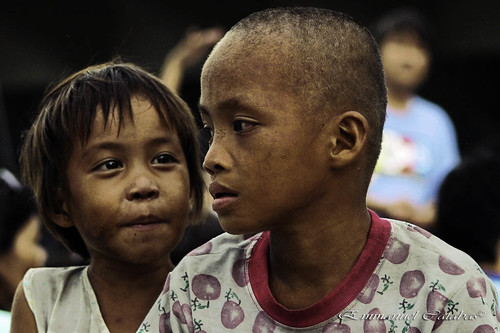
Recently, I chanced upon a discussion in the internet regarding why there’s so much poverty in the
The visitor is telling him how he had come to love the country due to its beautiful people and breathtaking sceneries. Then continued with his observation that Filipinos are a very religious people. Bible verses could be seen almost everywhere; from the mud flaps of tricycles and jeepneys to anywhere a person is able to express his religiosity. However, in all the places he has visited, he also observed that in spite of the people’s profound belief and faith in their religion, still, there is so much poverty in the country.
The question was then posed: Why so much God and poverty in our country?
The pastor then laments that in some “godless” countries like China and Vietnam China Vietnam
While some Christian countries like the Philippines
Statistics show that from 37% to 45% of the Philippine population live below the poverty line. With scarce opportunities for jobs, a significant number of the labor force is looking beyond its shores for gainful employment. Majority of these workers are married individuals who are forced to sacrifice familial relationships in the hope of gaining better living conditions for their families.
Are the achievements of these two Communist and “godless” countries a result of luck or of intervention by the gods?
Both China and Vietnam
The difference is both China and Vietnam Philippines
However, despite these adversities and deficiencies, Filipinos are still ranked as one of the happiest people in the world. Therefore, I could surmise that religion does have an influence on poverty, but on a positive note. The Filipinos’ belief and faith in their God and religion lessen the burden they have to face daily in their lives. It is the only hope that they can hold on to in their unpleasant world. It is the only source of his strength to have the power to choose his own path and curve his own destiny. Aside from this belief there is no one else that they can turn to.
Ever since the advent of man and his society, poverty has already been one of its main concerns. Social  stratification evolved at the same time that humans learned how to live together as a community. Establishing its civilization, the urbanization of society also came into development due to the significant changes in the way people interacted among themselves. From a simple village organization to a larger, more complex urbanized social structure brought about by their new found needs for trade, agriculture and warfare. People are being uprooted from their homes and lands either from conquests or of their need to find a better means of livelihood. Oftentimes they could only found them in the cities where there are more economic activities. With these new development there came into being another stratum in its social hierarchy, the lowest echelon of society – the landless, the laborers, the slaves - the people we now call the poor.
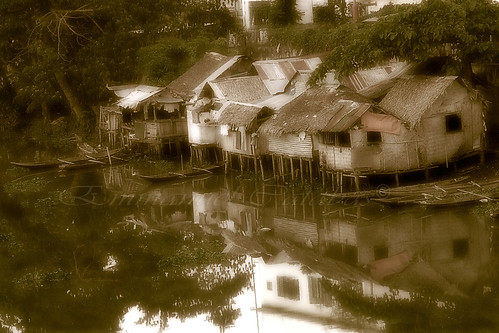 stratification evolved at the same time that humans learned how to live together as a community. Establishing its civilization, the urbanization of society also came into development due to the significant changes in the way people interacted among themselves. From a simple village organization to a larger, more complex urbanized social structure brought about by their new found needs for trade, agriculture and warfare. People are being uprooted from their homes and lands either from conquests or of their need to find a better means of livelihood. Oftentimes they could only found them in the cities where there are more economic activities. With these new development there came into being another stratum in its social hierarchy, the lowest echelon of society – the landless, the laborers, the slaves - the people we now call the poor.
As civilization progresses, this social stratification rose among nations around the globe as well. Wealthy and powerful nations use cheap labor and resources of less powerful nations for their own interests in building their empires or enlarging their domains. This dynamic continues up to the age of colonialism from the 15th up to the early 19th centuries.
History is replete with moral codes on social justice. The earliest known written one is that of the Babylonians which have their Code of Hammurabi, the Confucian teachings of the Chinese, the Talmudic Laws of the Jews, and the Bible of the Christians. In spite of these moral codes and teachings, sadly, the call for everyone to relate to the poor with compassion remain unheeded. Mistreatment of the poor and social injustice is ubiquitously practiced.
Many times man has tried to implement social justice. The bible tells us of how the early Christians lived communally that no one among them were in need. During the times of the prophets, God has continually reminded His people to live according to what should be morally correct. The earl y fathers of the Church have continuously preached to be compassionate with the poor. And some of them even practiced their vow of poverty. In modern times, the Industrial Revolution that began in
 England America
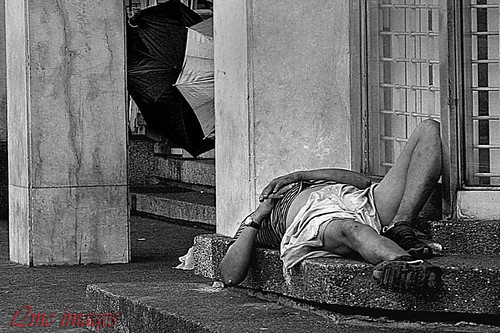 y fathers of the Church have continuously preached to be compassionate with the poor. And some of them even practiced their vow of poverty. In modern times, the Industrial Revolution that began in
While it is very true that Christianity is the best legacy of Spain to the Philippines
On the other end of the spectrum are those that are simply apathetic to the conditions of their countrymen. Here lies the majority of the populace. Those who are simply contented just to earn their upkeeps to go on with their ordinary lives.
Unless man will learn all the lessons of history that was played down from one era to another era; unless man will heed the moral teachings handed from one generation to the next generation, the tyranny and the apathy of man shall always be with us. The poor among us will still be persecuted and oppressed as they have been for thousands of years.
Subscribe to:
Posts (Atom)