Showing posts with label social. Show all posts

04 November 2011

Is Cloud Computing For You?

Wondering what cloud computing is or what it can do for you?


Cloud computing has been with us for quite a time. When the internet was first becoming popular, it was very trendy for companies to make their presence in cyber space by having or developing their own web sites. However, most of these are of the static (HTML) type.


As the development of more sophisticated script languages came, the more interactive the internet became. Thus came the more engaging social messaging and  photo sharing on the internet. Web sites that offer these services sprouted like mushrooms: Photobucket, Picasa, flickr for photo storage and photo album sharing; MySpace, Friendster and the most popular these days: Facebook, LinkedIn and Twitter for networking and virtual interaction  with your friends, whether just around the corner or as far as anywhere in the world. This new trend evolve into what is now popularly known as social media or social networking. Whatever interest or profession you may have, you will surely find a social site where you can join in.


The era of cloud experimentation is now over. Cloud computing is a success and has now become a part of our lives - as a person and as a consumer.


Today's consumer trend is to engage socially


The phenomenal success of the social media trend brought new mobile devices, most notably the smartphones and the tablet, which made it easier for consumers to engage in their social activities when or where ever they want to. Even at work.


Some companies even allow their employees to cyberloaf. Human Resource Executive Online recently issued a report on its study about the effect of internet surfing and employees engaging on social media while at work. According to the report it can be a restorative function for employees to cyberloaf and could thus lead to more productivity. Though this finding is still debatable, there is no reason for enterprises not to grab the opportunity to be where the action is. Wherever a large number of consumers congregate, there is a market present. And in this virtual world, there is no other way to make your presence felt than to have a 24/7 interaction with your customers.

Business and social interaction


For enterprises, cloud computing has also progressed from a simple pumping out of information to a more engaging inter-active experience with its customers.

Having a presence in the virtual interaction with the market is called social media marketing. According to Wikipedia, the term Social Media refers to the use of web-based and mobile technologies to turn communication into an interactive dialogue.


Social media marketing is on the rise according to a survey conducted by Burson Marsteller, a leading global public relations firm. This is just to prove how companies are responding to this new business/marketing trend. However, the report also shows that firms going the way of the cloud lack a real perspective and long term strategy to conduct its presence.


As in any social interaction within a community, building a trusted relationship is the key to building or sustaining relationships. This is the long standing norm, even in the non-virtual world. Leadership is built upon trust.

The way to do it in the cyberworld is by content management which could revolve around the emotional impact of the product and services. This strategy is nothing new as this is done ever since marketing has been invented. Though its presentation has improved.

Enterprise trends for the next 5 years
Consumer cloud trend is on the positive note and still growing. How about enterprise cloud trends?

For the last two decades, all technological innovations and efforts centered on the automation and improvements of efficiency within the confines of the corporate organizations. It was epitomized by a server-client or mainframe environment. The era of computing somehow distributed the work processes to the different business units which the Enterprise Resource Planning or ERP applications provided. It enabled information or data sharing within the corporation.

As cloud computing progresses, so is collaborative efforts among business partners, this is referred to as B2B. Supply chain management is a critical function in decision making. This involves the buying, making, moving and selling processes. If any of the links involve breaks down then a big problem arises which may be costly to repair.

With the web and internet facility this collaboration expedites the sharing of information and workflow process - from quotes/proposal submission, purchase orders issuance, shipment notifications and remittance of payments - among business partners.

Cost effective cloud services
If you are just starting or planning for the cloud, the question might be "should we go on public cloud or have a private cloud?"


It will really depend on the organization, but having a private cloud might be a very expensive venture, especially if one is just starting up to bring their business into the cloud. There are a lot of things to consider: hardware, software and personnel are just some of the most important.


On the other hand, there are already a lot of distinguishable companies offering the right cloud solution for any size of business. This is easier to deploy and you can rely on the support of the business partner you have selected.


If security is the main concern, well, a private cloud does not guarantee a more secured infrastructure but on how defense parameters are established. 


Is Cloud Computing for you?
For consumers, definitely.

For enterprises, a mere ERP is outdated - from a structured data mining to a more algorithmic search for a more robust information, as well as collaboration.


Collaborating not only with your customers but your business partners will ensure your leadership in whatever industry you are involved.


--()--


Further Reading:
Networkworld article on cloud computing
Business Insider Article on Social Media
Building strategic relationship through social media (content management strategies)
Social Media Examiner: Small Business and Facebook
Social Media Examiner: How Content Marketing Build Trusted Relationship

13 November 2008

Redeeming The Elusive Filipino Dream


We all have dreams; that inner desire for something we believe that will make our lives more progressive or for achieving something better than what we currently have.

To achieve that aspiration, we exert all our effort the best way we can. There is no stone unturned that we shall not turn. There is no narrow path that we shall not tread on. There is no rampaging river that we shall not cross. All for the sake of that elusive dream that strengthen us all – a better life and a bright future.

Whether it is of our own personal aspirations, that dream will merge with the dreams of other Filipinos. Even if we do the chasing of that elusive dream individually for personal interests, in the end it will touch the lives of many citizens of our nation. Our lives are so interconnected with each other. Our self-interest will somehow also be the interest of others. A success of one individual will also mean one more victory for the Philippines. All of us have a role in turning the wheels of the Philippine economy – as the market or as the producer; as an employee or as an employer; as a builder or as an architect. We all have a share in the building and shaping of our nation. Not many of us realize this.

It is therefore of much import for all us to look beyond our self-serving interests. We have to realize that in every task we do, legal or illegal, legitimate or illegitimate, it affects another Filipino. Our future is the future of our country. Our failure is its failure. If we want to change our lives, we also must persevere to effect that change our country needs most.

However, our country needs not only a change but a transformation – of its ideology; of its politics; of its culture. The country is in deep mire. Slowly, we are losing our dignity as a people. A people moving in the highways of globalization without a common vision nor a common mission.

We are lost in the jumble of the right and left ideologies; conservatism and liberalism; faith and secularism; administration or opposition. Most of us do not even understand the meaning of these opposing poles or of what they are standing for. What matters for most of us is to get by our daily business without fears for our future. To find jobs or to build businesses without the hassles of bureaucracy. To live our life peacefully and decently.

Our politics need a very radical transformation. Sadly, most of our politicians could not present to us any new ideas of how the country should be governed. All we hear are the rhetoric of repackaged personalities. For that is what our politics has turned out to be – a politics of personalities; politicians who do not have any clear political agenda – economic nor a worthwhile idealism. Our political system, sadly, are in a state of disarray. Party loyalties bounded to a common ideology are missing. They do not even have a strong vision to guide the nation; except for their shortsightedness of gaining power.

It is very sad to say that our culture has been heavily damaged by corruption. In every level of the citizenry, this scourge has been permeating its ugly head. Devouring whatever little hope we still have. We are losing our core values of discipline, temperance, self-reliance and honesty. Our communal value of social responsibility is being forgotten; pushed behind our self-consciousness. Thereby producing a deficit of empathy in the country.

But whenever we feel disheartened, we must gather our wits and continue to fight not any external foes, but ourselves. We need to cultivate that attitude of communal activism girded by persistence and empathy. We can only transform our world if we can transform ourselves back to our core values - from apathy to empathy; from passivism to activism. We need to redevelop our communal values that will bring about social justice.

We have to effect that transformation we need ourselves; no one will do it for us. We have once shown to the world that we, as a people can do it peacefully when we dethroned a detested dictator during the first EDSA revolution. We have revolutionized revolutions – transforming them from being bloody agents of change to being peaceful agents of change. Our example led to the downfall of many communist regimes in Europe.

We can still do what we need to be transformed. It is still not too late to redeem that elusive Filipino dream. However, this time the political transformation has to be done not in the streets but in the way of the democratic processes – the prudent use of our power as a transformed electorate to select the best people that will run our government based on a clear platform of governance.

The people of Pampanga have shown to us how they were able to organize themselves to use that power. The people of Isabela have proven to us that it is possible to choose a leader worthy of their trust. They have had enough of political dynasties and they wanted change. Change they got. The Filipino also wanted a transformed Philippines – culturally and politically. And we can do it!

There are many ways how we can do it. There are already many reliable organizations that we can extend our time, talent and expertise, as well as money. They can help us organize the way for our social and cultural transformation – for poverty alleviation and community organizing, there is the Gawad Kalinga (GK); for crime watchdog, there is the Volunteers against Crime and Corruption (VACC) and many others, each an expert in their chosen fields. Let us volunteer in any of these legitimate organizations, we need to make sacrifices and pay a price for our values. This is the only way we can show that we believe in those values.

We do not have to wait for an Obama to lead us through our miseries. Let us use our communal values to scrutinize the character and ideas of each politician claiming he or she has or is the answer to our nation’s problems. These kinds of people are the problem and not the solution. We already have too much of them in government, we do not need another one. Let us not be deceived by their empty promises and eloquent oration. Let us not be deceived by their great smile and scripted public appearances. Let us organize ourselves and demand from them their clear cut agenda and ideas. Let them prove their worth not only by their previous works but on how their characters were shaped by their work and position.

Obama did not become the phenomenon of the recent U.S. election because of his intellect nor personality nor race. He is a product of new ideas and the urgency of the times. His people needed a change and so they organized themselves to effect that change. There are many lessons we can learn from his historic election as a leader of the democratic world. Evidently, the most important of these is the power of the electorate to demand from him his ideas and how his character was shaped by his environment.

Five of our respected bishops have recently issued the call for a change. Hoping for liberators that will start the radical reforms our country needs. We need not look far or in the future. We ourselves are that liberators. Do not expect our politicians to change by themselves. It is a hope against hope. Only a determined and transformed electorate can force that transformation from our politicians. Let me also quote whom our bishops quoted “Upang maitindig natin ang bantayog ng ating lipunan, kailangang radikal nating baguhin hindi lamang ang ating mga institusyon, kundi maging ang ating pag-iisip at pamumuhay.” (Apolinario Mabini)

05 September 2008

God, Religion and Poverty


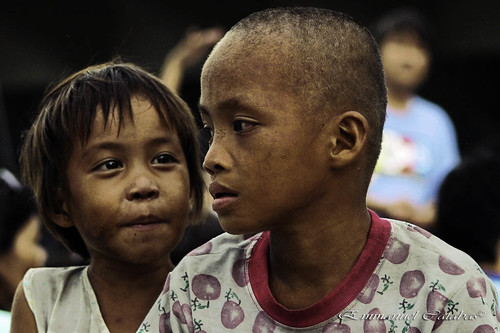
Recently, I chanced upon a discussion in the internet regarding why there’s so much poverty in the Philippines and other Christian countries. The discussion started with this story of a conversation with a wealthy foreigner visiting the country and a pastor.
The visitor is telling him how he had come to love the country due to its beautiful people and breathtaking sceneries. Then continued with his observation that Filipinos are a very religious people. Bible verses could be seen almost everywhere; from the mud flaps of tricycles and jeepneys to anywhere a person is able to express his religiosity. However, in all the places he has visited, he also observed that in spite of the people’s profound belief and faith in their religion, still, there is so much poverty in the country.
The question was then posed: Why so much God and poverty in our country?
The pastor then laments that in some “godless” countries like China and Vietnam (both are Communist or Socialist countries), they were able to reduce their poverty rate and were currently getting the lion’s share of available worldwide investments. It is a well–known fact that religion is being suppressed in both countries. In China, any citizen can only practice those religions which are officially sanctioned by the state. Vietnam has just recently been recovering from its war for independence and unification. They have fought a hard and long war that lasted for more than twenty years. Its Communist government has also suppressed the people’s freedom of worship.
While some Christian countries like the Philippines and in some Latin and Central American countries where religiosity is prevalent continue to grapple with poverty. There being not enough investments – local or foreign – to drive their economies forward.
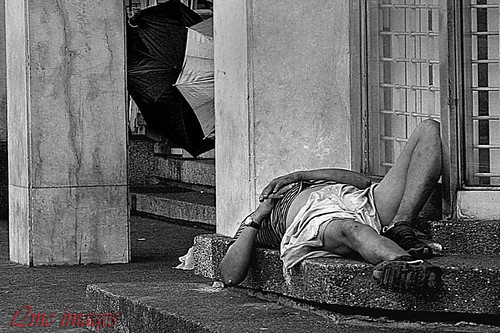
Statistics show that from 37% to 45% of the Philippine population live below the poverty line. With scarce opportunities for jobs, a significant number of the labor force is looking beyond its shores for gainful employment. Majority of these workers are married individuals who are forced to sacrifice familial relationships in the hope of gaining better living conditions for their families.
Are the achievements of these two Communist and “godless” countries a result of luck or of intervention by the gods?
Both China and Vietnam adopted the Socialist form of government after waging a bitter and deadly civil war. Both countries suffered from graft and corruption, from hunger and lack of economic activities as what the Christian countries are also experiencing. Both countries have also recently discovered that Communism or Socialism is just an illusion.
The difference is both China and Vietnam, after realizing their mistakes, undertook major social and economic reforms for the sake of their people’s welfare. While the Philippines, in spite of two peaceful revolutions, have not or could not implement any social or economic reforms needed to alleviate its poverty situation.
However, despite these adversities and deficiencies, Filipinos are still ranked as one of the happiest people in the world. Therefore, I could surmise that religion does have an influence on poverty, but on a positive note. The Filipinos’ belief and faith in their God and religion lessen the burden they have to face daily in their lives. It is the only hope that they can hold on to in their unpleasant world. It is the only source of his strength to have the power to choose his own path and curve his own destiny. Aside from this belief there is no one else that they can turn to.
Ever since the advent of man and his society, poverty has already been one of its main concerns. Social stratification evolved at the same time that humans learned how to live together as a community. Establishing its civilization, the urbanization of society also came into development due to the significant changes in the way people interacted among themselves. From a simple village organization to a larger, more complex urbanized social structure brought about by their new found needs for trade, agriculture and warfare. People are being uprooted from their homes and lands either from conquests or of their need to find a better means of livelihood. Oftentimes they could only found them in the cities where there are more economic activities. With these new development there came into being another stratum in its social hierarchy, the lowest echelon of society – the landless, the laborers, the slaves - the people we now call the poor.
As civilization progresses, this social stratification rose among nations around the globe as well. Wealthy and powerful nations use cheap labor and resources of less powerful nations for their own interests in building their empires or enlarging their domains. This dynamic continues up to the age of colonialism from the 15th up to the early 19th centuries.
History is replete with moral codes on social justice. The earliest known written one is that of the Babylonians which have their Code of Hammurabi, the Confucian teachings of the Chinese, the Talmudic Laws of the Jews, and the Bible of the Christians. In spite of these moral codes and teachings, sadly, the call for everyone to relate to the poor with compassion remain unheeded. Mistreatment of the poor and social injustice is ubiquitously practiced.
Many times man has tried to implement social justice. The bible tells us of how the early Christians lived communally that no one among them were in need. During the times of the prophets, God has continually reminded His people to live according to what should be morally correct. The early fathers of the Church have continuously preached to be compassionate with the poor. And some of them even practiced their vow of poverty. In modern times, the Industrial Revolution that began in England produced what was later became the model of the modern labor codes to protect women and children from exploitation. Abraham Lincoln waged one of the bloodiest civil war against his countrymen to end slavery in deference to America’s declaration of human rights. All of these are in vain. Social injustice is still prevalent. Poverty is still the scourge of mankind as it has always been.
While it is very true that Christianity is the best legacy of Spain to the Philippines, it is the tyranny of some of its adherents that contributes to the persecution of the majority of the population. Their avarice is unquenchable.
On the other end of the spectrum are those that are simply apathetic to the conditions of their countrymen. Here lies the majority of the populace. Those who are simply contented just to earn their upkeeps to go on with their ordinary lives.
Unless man will learn all the lessons of history that was played down from one era to another era; unless man will heed the moral teachings handed from one generation to the next generation, the tyranny and the apathy of man shall always be with us. The poor among us will still be persecuted and oppressed as they have been for thousands of years.